Trending

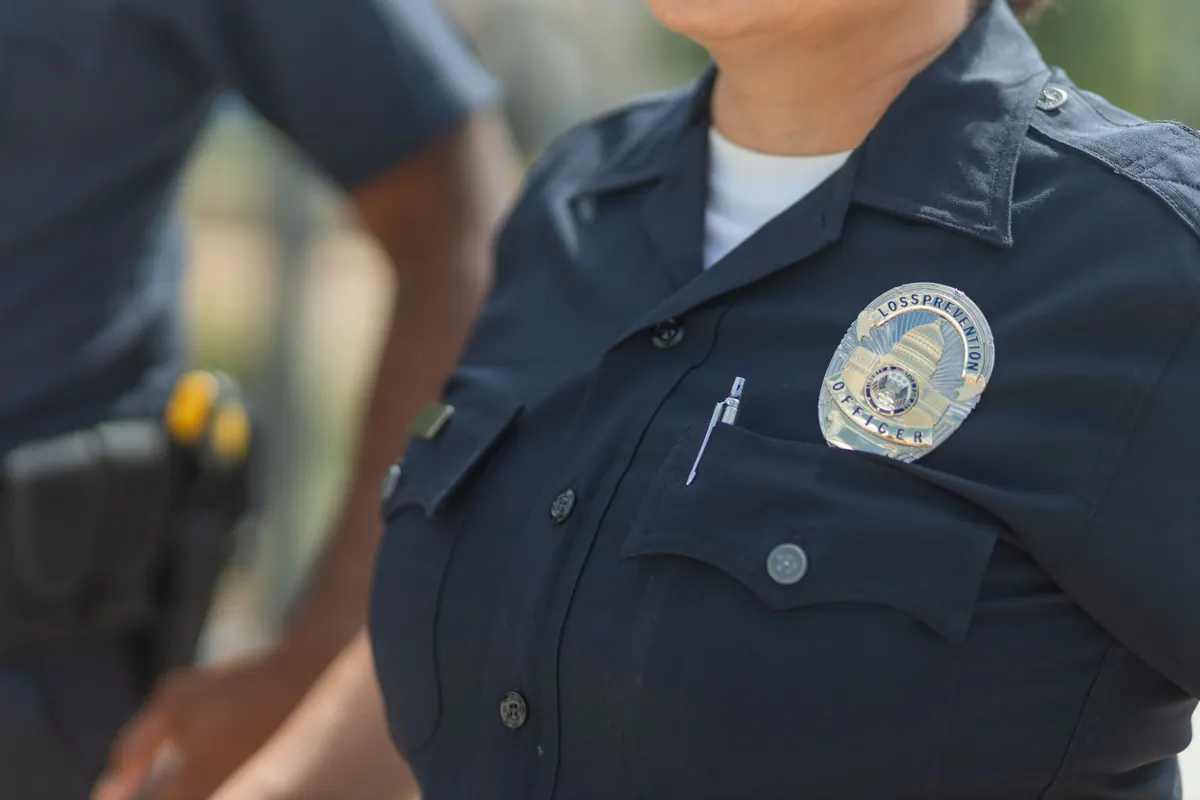
There is a particular confusion that arrives at the front counter of a police station or at the edge of a cordon: everyone looks broadly alike, and the flash of silver on a shoulder does not explain itself. British police uniforms are a written language — chevrons, stars and crowns — and once you can read it, you can tell at a glance who is running a shift and who you should be asking to speak to.
What follows covers the ranks and insignia you will actually see in England and Wales, with notes on Scotland, Northern Ireland and the forces that do things their own way. One caveat worth holding on to: uniform design is decided force by force, and badges have been redesigned repeatedly over the past twenty years. The pattern below is the standard one, not a guarantee about the officer standing in front of you.
In England and Wales the ladder is broadly the same in every force. Almost everyone starts at the bottom rung, though a small number of direct-entry schemes now take people straight in at inspector or superintendent level.
Above that line sit the chief officers: assistant chief constable, deputy chief constable and chief constable. In some forces those same jobs carry different names.
Nearly every badge on a British police uniform is assembled from a very small set of parts. Learn these three and you can decode almost any epaulette.
Chevrons are the stripes worn by sergeants. Three of them, and nothing else, means sergeant. A chevron combined with another symbol is a different rank entirely, so do not assume that more stripes automatically means more seniority — the system is not a ladder of stripes.
The star-shaped pip appears from inspector upwards. One on its own is an inspector; add a crown and you have a chief inspector. The pip is small and easy to miss in poor light, which is why chief inspectors are so often mistaken for inspectors at a distance.
A single crown is a superintendent, and the crown stays in the mix all the way to the top. It is the same St Edward's Crown used across the armed forces, which is a useful thing to know if you ever have to explain the system to someone who has served.
Historically these badges were stitched onto the upper sleeve. Most forces now put them on epaulettes, and a few use text — "Sgt", "Insp" — as well. Colour varies too: silver or white on black is the common combination, but not the only one.
The ranks above chief superintendent are known collectively as chief officers. Assistant chief constables, deputy chief constables and chief constables all wear badges that build on the crown, becoming more elaborate as you go up, and a chief constable's badge is distinctive to the office. There is no neat three-stripe rule at this level, and arrangements have varied between forces and over time. If you need certainty here, check the force's own uniform guidance.
The Metropolitan Police adds its own vocabulary. Above superintendent, the Met has commander — roughly the equivalent of an assistant chief constable elsewhere — then deputy assistant commissioner, assistant commissioner and deputy commissioner, with the commissioner at the top. The City of London Police, the British Transport Police and the other national forces each have their own titles as well. Where two badges look unfamiliar, compare the job rather than counting the stars.
Several uniforms carry lettering that looks like rank but is not.
Police Scotland has been a single force since 2013 and uses the same rank names as England and Wales up to chief constable, with its own uniform and badge design. The Police Service of Northern Ireland also follows the same ladder of names, in a green uniform, and its structure likewise runs up to a chief constable. Add the British Transport Police, the Ministry of Defence Police and the Civil Nuclear Constabulary, and you can see why a single national chart does not quite exist.
In practice you rarely need more than the top half of this list. If you need to speak to someone in charge at an incident, the sergeant or inspector is usually the person making the decisions, and asking a constable to fetch them is entirely normal. Address officers by their rank — "Sergeant", "Inspector" — or play safe with "Officer", "Sir" or "Ma'am". Nobody minds. What does not go down well is a member of the public calling an officer "guv".
It is also fine to ask for a name and collar number. Officers expect it, and the number on the shoulder exists precisely so that a conversation can be traced later if it needs to be. If you are writing about a specific interaction, note the number rather than trying to remember a face.
Two final points. Look at the epaulette rather than the uniform colour, because plain-clothes officers still wear rank badges when the occasion calls for it. And if precision matters — a complaint, a letter, a piece of research — check the relevant force's own website or the College of Policing guidance rather than relying on a general chart. Uniforms get redesigned, ranks get renamed, and the badge actually on the shoulder is the version that counts.
Photo: Kindel Media / Pexels